🎉 Up to 70% Off Selected ItemsShop Sale

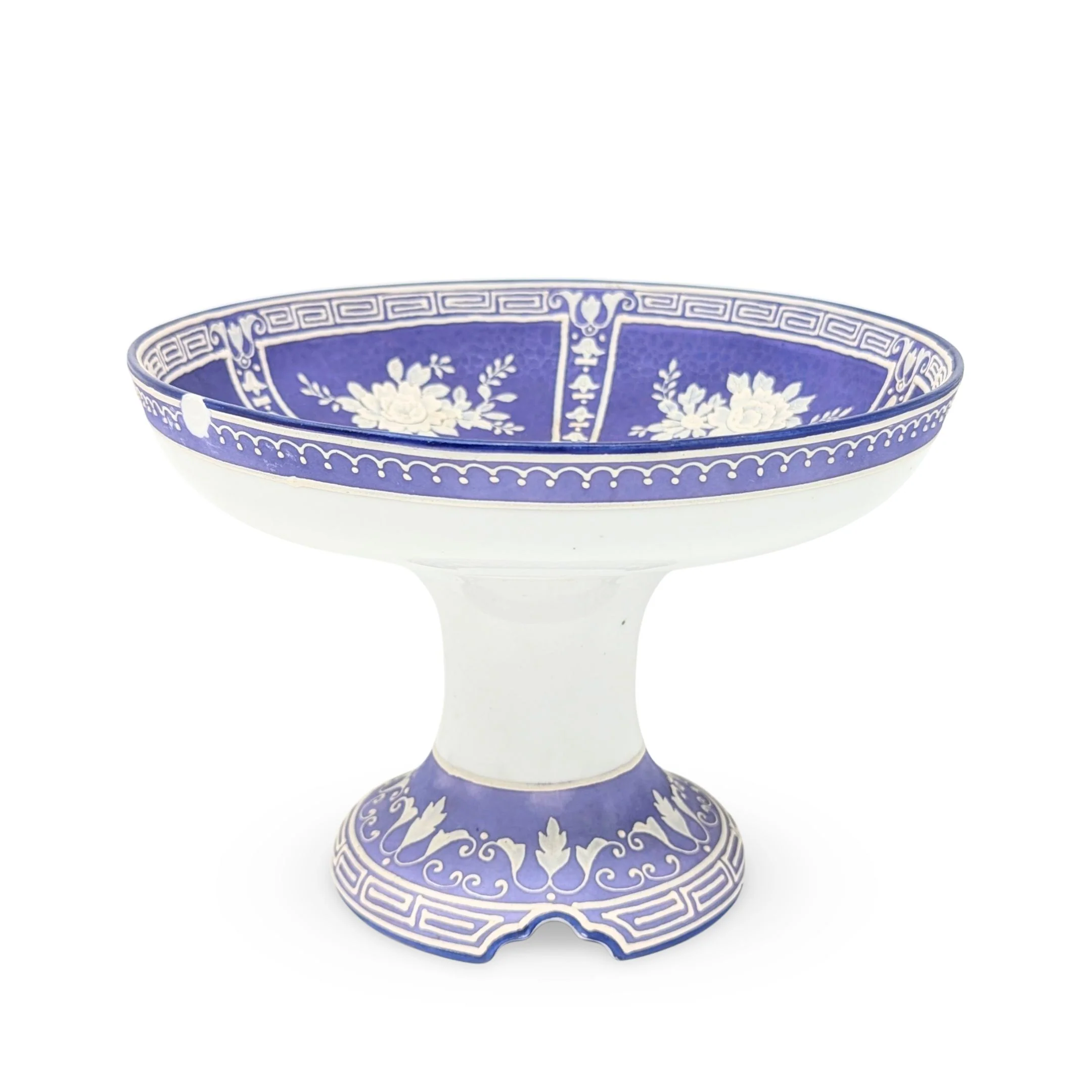
Nippon Lavender Moriage "Jasperware" Compote
Item: Compote
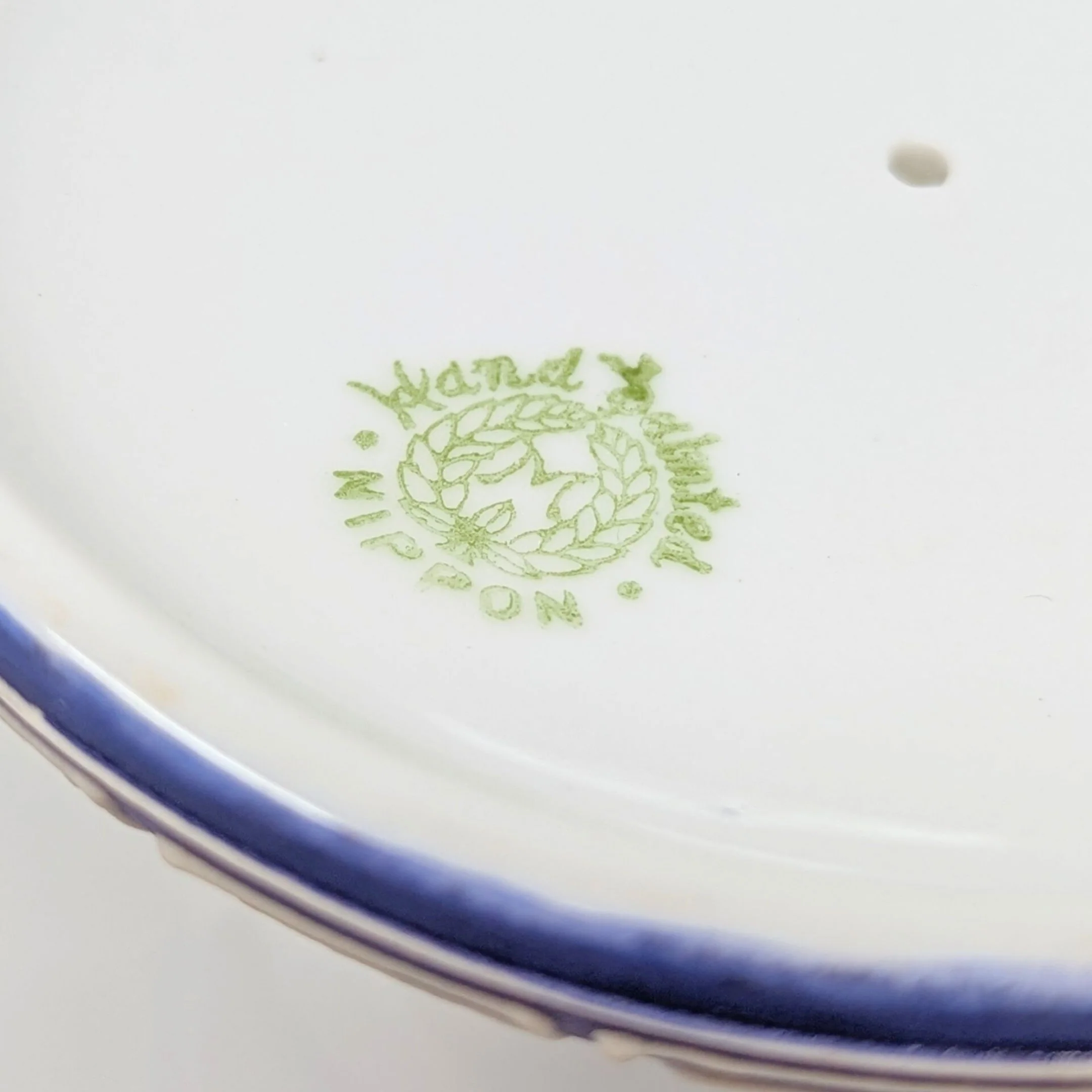
Make: Morimura Bros. Nippon (Japan)
Style: Moriage Jasperware
Age: ca. 1915
Construction: Porcelain
Dimensions: 5 1/8" Tall x 7 1/8" Diameter
Condition: Very good. Has a chip to the upper rim as well as some minor discoloration and fading. Please see photos!
Details: This Japanese adaptation of the popular Wedgwood Jasperware porcelain has become extremely collectible. Japanese moriage is a decorative technique used on pottery and porcelain, characterized by raised slip decorations that create a three-dimensional effect.
"Moriage" translates to "piling up" or "building up", and it involves applying layers of slip (a liquid clay mixture) to the piece, often using a tube to create intricate patterns and designs. This technique was popular in late 19th and early 20th century Japan, particularly during the Meiji period, and is often associated with Nippon ware and Dragonware. Please see our other listings for additional pieces in this pattern!
Product Information
Product Information
Shipping & Returns
Shipping & Returns



Nippon Lavender Moriage "Jasperware" Compote
Nippon Lavender Moriage "Jasperware" Compote
Item: Compote
Make: Morimura Bros. Nippon (Japan)
Style: Moriage Jasperware
Age: ca. 1915
Construction: Porcelain
Dimensions: 5 1/8" Tall x 7 1/8" Diameter
Condition: Very good. Has a chip to the upper rim as well as some minor discoloration and fading. Please see photos!
Details: This Japanese adaptation of the popular Wedgwood Jasperware porcelain has become extremely collectible. Japanese moriage is a decorative technique used on pottery and porcelain, characterized by raised slip decorations that create a three-dimensional effect.
"Moriage" translates to "piling up" or "building up", and it involves applying layers of slip (a liquid clay mixture) to the piece, often using a tube to create intricate patterns and designs. This technique was popular in late 19th and early 20th century Japan, particularly during the Meiji period, and is often associated with Nippon ware and Dragonware. Please see our other listings for additional pieces in this pattern!
$29.70
Original: $99.00
-70%Nippon Lavender Moriage "Jasperware" Compote—
$99.00
$29.70Product Information
Product Information
Shipping & Returns
Shipping & Returns
Description
Item: Compote
Make: Morimura Bros. Nippon (Japan)
Style: Moriage Jasperware
Age: ca. 1915
Construction: Porcelain
Dimensions: 5 1/8" Tall x 7 1/8" Diameter
Condition: Very good. Has a chip to the upper rim as well as some minor discoloration and fading. Please see photos!
Details: This Japanese adaptation of the popular Wedgwood Jasperware porcelain has become extremely collectible. Japanese moriage is a decorative technique used on pottery and porcelain, characterized by raised slip decorations that create a three-dimensional effect.
"Moriage" translates to "piling up" or "building up", and it involves applying layers of slip (a liquid clay mixture) to the piece, often using a tube to create intricate patterns and designs. This technique was popular in late 19th and early 20th century Japan, particularly during the Meiji period, and is often associated with Nippon ware and Dragonware. Please see our other listings for additional pieces in this pattern!